

Irrigation decisions
Is it time to irrigate?
What to check before deciding on the next irrigation
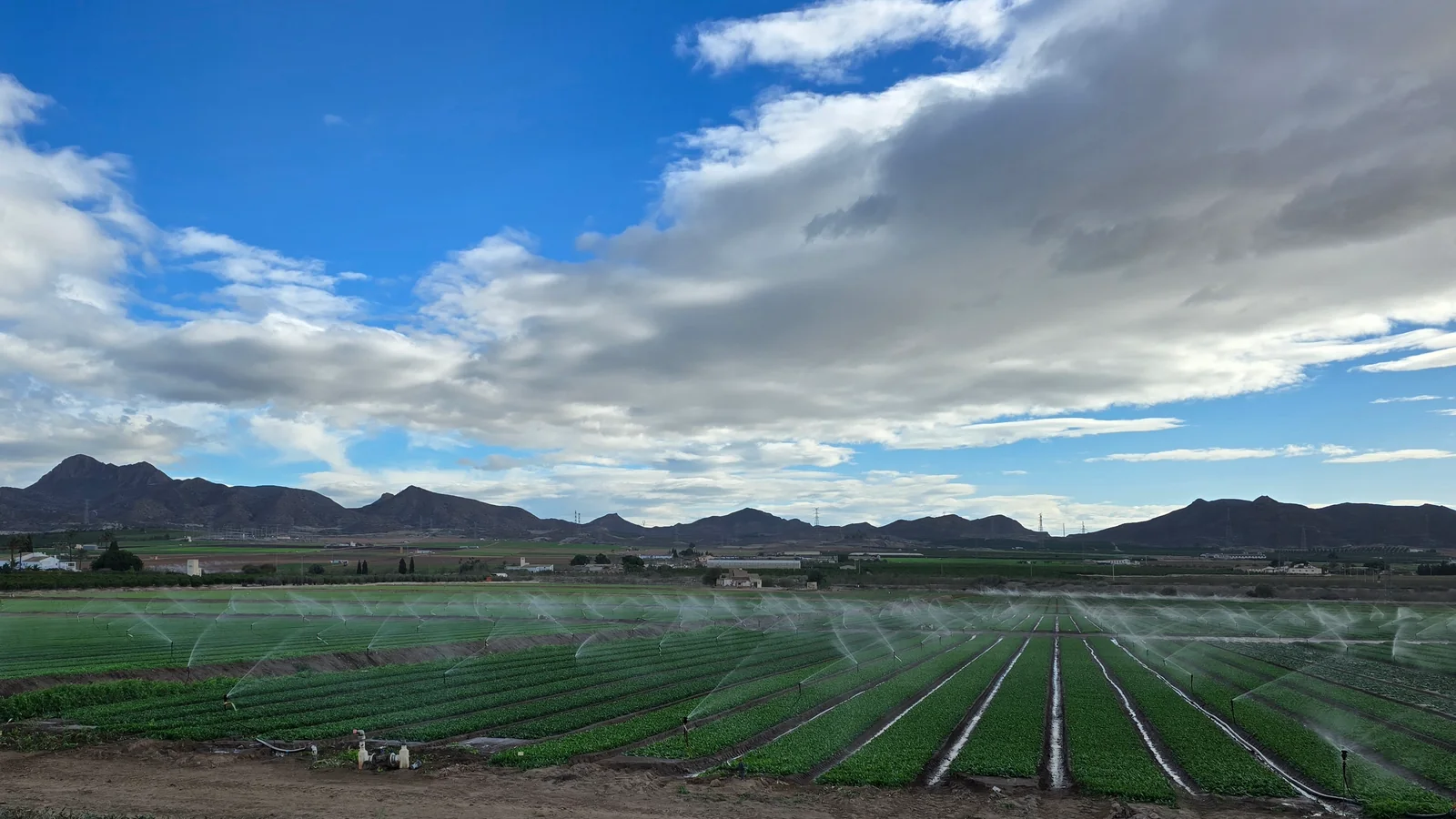
Good irrigation is not about turning on the water because the scheduled time has arrived. It is about checking what is happening in the soil, how the plant is responding and whether the available water is still within reach of the roots.
In the field, it is easy to settle into a routine: a set number of minutes, a set number of times a week. That routine can provide a starting point, but it should not replace observation. The same crop does not use the same amount of water throughout the season, and a field does not respond in the same way every day.
That is why, before deciding on the next irrigation, it is useful to bring together several signals. No single reading tells the whole story.
First, understand what we are measuring
A tensiometer does not directly indicate how many litres of water remain in the soil. It measures the tension with which the soil holds water. Put simply, it tells us how much effort the root needs to make to extract it.
As the soil dries, that tension normally increases. After irrigation, it decreases. But a reading close to zero does not automatically mean that the entire soil profile has been adequately irrigated. It may indicate high moisture around the tip, but it may also mean that the instrument has lost water, that air has entered it or that it is not working properly.
The tensiometer represents only the point where its ceramic tip is installed. On its own, it does not represent the whole field, the full rooting depth or the overall condition of the crop.
Three checks before changing irrigation
First: check the soil.
Observe moisture at the depth of the active roots and compare it with another representative point. The surface may be dry while water remains below, or it may look moist after a short irrigation that has barely reached the root zone.
Second: check the instrument.
Check that the tensiometer retains its water, that no air is entering and that it responds after irrigation. If the needle remains still while the soil changes, that reading needs to be checked before it is used to make a decision.
Third: check the trend.
A reading is much more valuable when it forms part of a sequence. Record the date, time, last irrigation, rainfall received and any work carried out on the equipment. What matters is not just the number, but whether its trend is consistent with what is happening in the soil and the plant.
Weather is also part of the reading
Temperature, radiation, wind and air humidity change water demand. A hot, dry and windy day cannot be interpreted in the same way as a cool, humid and still day. Nor does a young plant respond in the same way as one in full flowering, fruit set or bearing a crop.
There is an important qualification: in intense heat, atmospheric demand increases, but a stressed plant may close its stomata, reduce transpiration and slow its growth. We should therefore not infer water status from temperature alone or from the appearance of the leaves alone.
Interpretation also changes after heavy rainfall. Check how far the water has reached, whether deep drainage is occurring, whether nutrients have moved and whether the root zone still contains enough air. More water does not always mean better conditions for the roots.
The same principle applies in a greenhouse, even though the variables change. There, we need to relate the readings to the temperature, humidity, radiation and ventilation inside. A greenhouse provides protection from the weather outside, but creates its own climate, which also affects the plant.
A simple way to make better decisions
Before irrigating, I suggest answering five questions:
- What do the readings indicate, and how have they changed?
- At what depth is the moisture actually present?
- Where are the active roots?
- What weather conditions has the crop experienced?
- Do the instrument readings agree with the soil conditions and the plant's response?
If the answers are consistent, the decision will have a sound basis. If they contradict one another, it is prudent to check again before increasing, reducing or delaying irrigation.
Observe before acting
Agriculture does not work with a single figure that is valid for every soil, crop and day. We can organise the way we observe, but we cannot turn its interpretation into a fixed rule.
A good decision comes from relating water, soil, air, roots, plant and climate. The instrument provides information. Experience puts it in context. And monitoring confirms whether the decision was right.
Before asking ‘Is it time to irrigate?’, let us ask a better question: ‘What is the crop as a whole telling me today?’